 29th Sep 2026
 7 Min Read
 Story Story Team
Nano and micro influencers are often the best fit for a brand: close-knit audiences, real conversations in the comments and fees that fit a small budget. They are also the hardest creators to find. There are three ways to find them: big influencer platforms, Instagram’s own recommendations, and tools that automate the Instagram method. Here is what each one is good for, and where it falls short. Yes, we make Story Story, so we have been upfront about the trade-offs.
The short answer
- Big influencer platforms work like directories. They are useful for established creators, but many nano influencers, and a large share of creators under 10,000 followers, are simply not in them.
- Instagram’s recommendation engine is the best discovery tool out there. It knows who follows whom and who engages with what. Used by hand, it finds great creators, but it takes hours.
- Story Story automates what you already do on Instagram. Start from creators you like, and get similar creators, down to a few hundred followers, with their content and data side by side.
What counts as a nano or micro influencer?
There is no official definition, but most brands use these ranges:
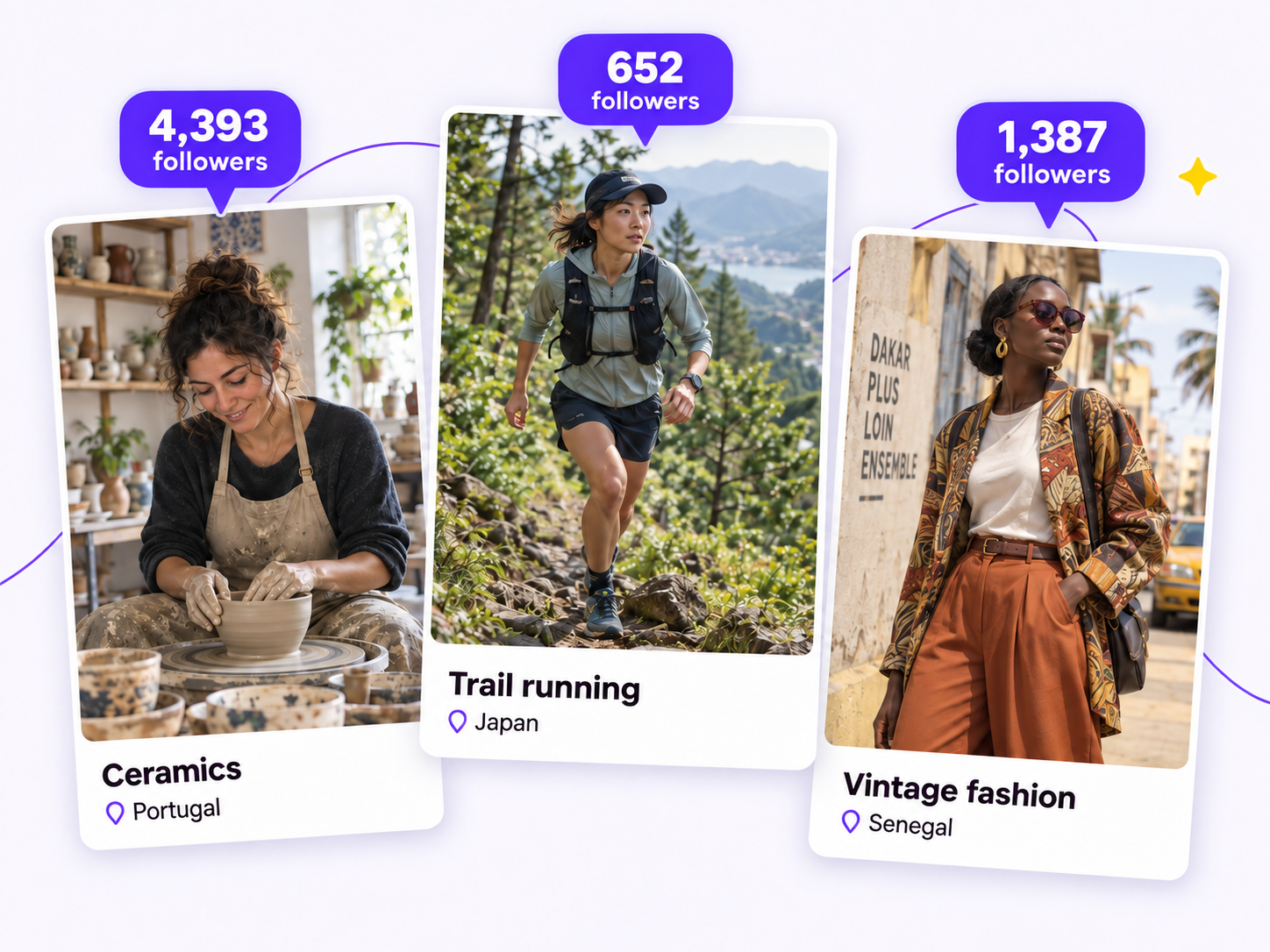
- Nano influencers: from a few hundred to 10,000 followers. Often everyday people with a strong niche: a local runner, a home ceramicist, a vintage collector.
- Micro influencers: from 10,000 to 100,000 followers. Established in their niche, more used to working with brands, still close to their audience.
The smaller the account, the more its audience looks like friends and neighbours rather than fans. That is what makes nano influencers valuable, and it is also why they are hard to find.
Method 1: big influencer platforms (the directory approach)
Most influencer marketing platforms are built as a directory. They collect a database of creator accounts ahead of time, sort them into categories, and let you filter by country, follower count or topic.
That works well for creators who are already established. For nano and micro influencers, the directory approach has three limits:
- The creators you want are not in the directory. A database has to decide which accounts to index, and small accounts are the first to be left out. Many creators under 10,000 followers never make it in, and the ones who grew last month are not there yet.
- Categories are too broad. A directory knows “fashion” or “fitness”. It rarely knows “vintage fashion in Dakar” or “trail running in Japan”, which is exactly the level at which nano influencers live.
- You judge profiles from numbers, not content. A list of handles and follower counts does not tell you whether a creator’s style fits your brand. You still open each profile on Instagram.
When it makes sense: you need established micro and macro creators at scale, and the budget fits. Many of these tools come with annual contracts. See our comparison of influencer marketing platforms for prices.
Method 2: Instagram’s recommendation engine, by hand
Here is the method most experienced influencer managers actually use. Instagram’s recommendation engine is extremely good at finding lookalike creators, because it is built on who follows whom and who engages with what, not on a category someone typed into a database.
How it works:
- Start from a creator who fits your brand. A past partner, an account your customers follow, a creator who tagged you.
- Open the suggestions. On their profile, tap the arrow next to the Follow button to see similar accounts.
- Check each suggestion. Scroll their grid, look at their Stories and Reels, check their follower count and whether the comments are real.
- Repeat from the best finds. Each good creator leads you to a new set of suggestions, a few steps deeper into the niche.
- Add other signals. Tagged posts on the brands you admire, comments under your competitors’ posts, local hashtags and location pages.
This finds creators no directory has ever indexed, including accounts with a few hundred followers.
The catch: it takes time. To end up with 30 good creators, you may open a few hundred profiles. Instagram does not show engagement rate, so you calculate it by hand. You copy handles into a spreadsheet, suggestions are skewed by your own account’s activity, and sharing the shortlist with your team means sending screenshots.
Method 3: the Story Story way, automating what you already do
Story Story takes the Instagram method and does the legwork for you.
- Start from creators you already like. Instead of picking a category, you give Story Story creators who fit your brand. It runs a real-time search for similar creators, the same way you would chain Instagram suggestions, but across many more profiles.
- Find creators with a few hundred followers. Because the search is not limited to a pre-built directory, it surfaces nano influencers that databases miss, in any niche and any country.
- See their content as you search. Each result shows what the creator actually posts, so you can judge the fit in seconds instead of opening every profile.
- Check the numbers in the same place. Engagement rate, view rate and creator score sit next to the content. No more calculating engagement by hand.
- Filter and shortlist. Narrow results by follower count, country and engagement, then save the best finds to a shortlist your team can see.
Plans start at €49 per month with no annual contract, and you can try it free for 5 days without a credit card.
How to find nano influencers with Story Story, step by step
- Pick 3 to 5 reference creators. Choose accounts that already fit your brand: the tone, the visual style and the audience you want.
- Set your brief. Choose the country and a follower range. For nano influencers, something like 500 to 10,000 followers is a good start.
- Browse visually. Scroll the results and drop anyone whose content does not match. This is the step that takes hours on Instagram.
- Check the data. Compare engagement rate, view rate and creator score for the profiles you keep.
- Shortlist and reach out. Save the best creators, share the list with your team and start the conversation.
What to check before you contact a nano influencer
- Real engagement. Look for comments that are specific to the post, not just emojis. On small accounts, a high engagement rate is normal; very low engagement is a red flag.
- The right audience. A creator’s followers should be where your customers are. Check the country and language of their content and comments.
- Consistency. Regular posting, including Stories, shows a creator who will deliver on time.
- Content quality. Would you be happy to repost their content on your brand account? If not, move on.
- Past brand work. Previous partnerships, clearly disclosed, show they know how collaborations work, without being saturated with ads.
Which method should you choose?
- Choose a big influencer platform if you mostly work with established creators at scale and an annual contract fits your budget.
- Use Instagram by hand if you need a handful of creators once and have the time to scroll.
- Choose Story Story if you work with nano and micro influencers regularly, in a specific niche or country, and want the Instagram method without the hours it takes.
 Find nano creators
 See their content
 Build your shortlist